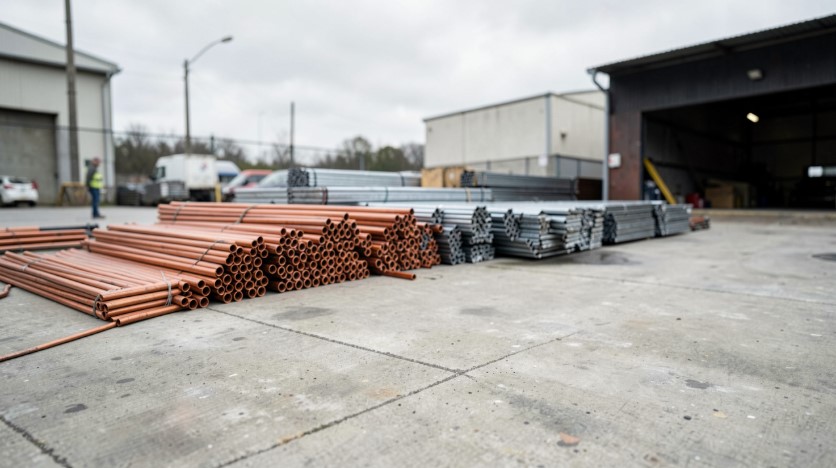
Understanding how scrap metal is graded can help businesses prepare recyclable materials for collection or delivery and better understand how their scrap is valued.
While current metal recycling prices provide an indication of market conditions, the type, grade, condition, quantity and composition of the materials also influence their value. Preparing and identifying recyclable metals before collection or delivery can assist with accurate assessment and grading.
Identifying Ferrous and Non-Ferrous Metals
One of the first steps in scrap metal grading is identifying the different types of metals within a load. Ferrous metals generally contain iron, while non-ferrous metals include materials such as copper, brass and aluminium.
A magnet can help identify many common ferrous metals, although magnetism alone is not sufficient to accurately identify every metal or grade.
Separating different metal types where practical can assist with identification, weighing and grading. SRS Metals also accepts mixed recyclable metals, which can be assessed and processed accordingly.
How Contamination Affects Scrap Metal Grading
Contamination refers to unwanted materials attached to or mixed with recyclable metals. Materials such as plastic, rubber, timber and soil can affect the assessment and grading of scrap metal.
Where practical and safe, keeping recyclable metals free from unnecessary contamination can assist with accurate grading. However, customers should not undertake unsafe dismantling or burn insulation from electrical cables.
SRS Metals does not accept hazardous materials, including asbestos-containing materials. If you are unsure whether a material is suitable for recycling, contact our team before arranging collection or delivery.
What Shapes Your Quote
Scrap metal quotations are influenced by several factors, including metal type, grade, condition, purity, contamination and quantity.
Current metal recycling prices can fluctuate with domestic and international market conditions. The composition and condition of the materials being assessed can also influence their value.
Providing accurate information about your scrap metal can help the recycling team assess your materials and discuss suitable recycling arrangements.
Preparing Scrap Metal for Collection or Delivery
Preparing recyclable metals before collection or delivery can assist with efficient handling and accurate grading.
Where practical:
- Separate different types of recyclable metals.
- Identify any attached non-metallic materials.
- Keep electrical cables intact rather than burning insulation.
- Ensure materials are free from hazardous substances.
- Store recyclable metals safely and securely.
For commercial and industrial businesses requiring professional scrap metal collection, SRS Metals provides collection services across Melbourne and Tasmania, with arrangements based on material types, quantities, site access and operational requirements.
Scrap metal bins and bulka bags are also available for suitable commercial and industrial requirements.
What Happens to Scrap Metal After Collection?
Once recyclable metals are received at SRS Metals’ facilities, they are identified, weighed, graded and processed according to their material type and grade.
Our processing operations help prepare recyclable metals for established domestic and international markets, keeping valuable materials in circulation for further use.
Recycle Your Scrap Metal with SRS Metals
Understanding the types of recyclable metals you generate and keeping materials separated where practical can assist with accurate weighing, grading and assessment.
With more than 70 years of combined industry experience, SRS Metals provides scrap metal recycling services across Melbourne and Tasmania.
Residential and business customers are welcome to drop off suitable recyclable metals at our Thomastown, Hobart and Burnie locations. Commercial and industrial customers can also contact our team to discuss collection requirements.
To learn more about our scrap metal recycling and collection services, visit www.srsmetals.com.au.