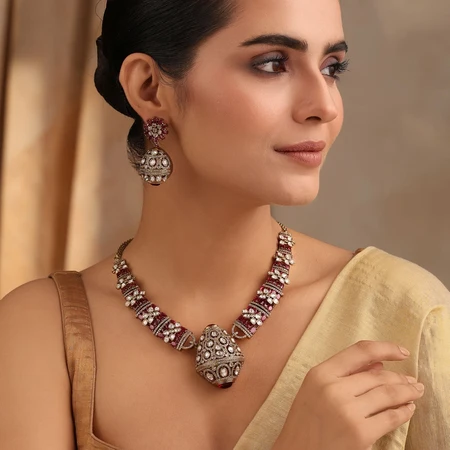
Polki necklaces range from close chokers to stacked strands, and the blouse style decides the length of the necklace. Short pieces stay clear of heavy collar embroidery, and layered pieces suit a plain neckline. Matching jhumkas with a kaan chain round out the set.
The stones on a Polki necklace keep the flat, rough face of an uncut diamond. They glow more than they sparkle. Brides notice this at the first try-on, and some never go back to cut stones. Picking a Polki jewellery set mostly comes down to necklace length and the neckline it will rest on.
Polki Necklace Shapes That Sit at Different Heights
Statement Chokers: Chokers sit at the collarbone and carry the most visible stonework. Many close with a dori, a silk cord with tassels, and the fit adjusts by an inch or two. An antique gold polish darkens the metal around each stone. Brides choosing a Polki jewellery set for the wedding day lean toward this darker, heavier look.
Maharani Layers and Single Pendants: Layered Polki sets, sometimes sold as Maharani sets, hang two or more strands at staggered lengths. Pendant sets go the other way, with a single Polki drop on a chain. Plenty of designs mix Polki edges with a Kundan center. If you plan to shop Kundan jewelry set options, the two methods share a gold-toned base and pair well.
Where the Neckline Ends and the Necklace Begins
Short Pieces over Heavy Embroidery: Zardozi and sequin work around a blouse collar already adds a lot of shine. A long strand dragging across it can catch threads and gets lost in the pattern. Short pieces stay above the embroidery. So a choker or a short Polki jewellery set keeps both visible, the work a tailor spent weeks on and the stones you picked.
Layers on a Plain Neckline: A plain silk blouse with a deep round neck leaves a wide patch of open skin. Layered Polki fills that space on its own and turns the necklace into the main focus. Guides on how to layer necklaces suggest about two inches between strands. Put the heavier strand at the bottom, and keep the earrings small.
Earrings and Extras That Finish a Polki Look
Jhumkas and Ear Chains: Some Polki sets come with matching jhumkas, the bell-shaped earrings that swing with each step. Heavy ones pull at the lobe within hours. A kaan chain, also called a sahara, clips into the hair and takes some of that weight. A tiny stud higher on the ear borrows from the ear stacking trend. Before the wedding, sort these out:
- Screw backs on the heaviest pair
- A Maang tikka that repeats the necklace’s stone color
- Kaan chain length, checked against where the hair gets pinned
- One hathphool in the same polish as the necklace
Picks for Each Event: A wedding morning suits the full choker and its jhumkas. For the reception, a layered set in silver polish works well under evening lighting. At Diwali or Eid, champagne and lavender Polki stones read softer than bridal green. When you shop Kundan jewelry set designs for bridesmaids, pick the same gold polish as your Polki set.
Carry One Polki Look from Ceremony to Reception
Lots of brides buy the necklace before the blouse is stitched and find it sitting on the embroidery at the final fitting. By then the tailor cannot alter anything. Photograph the finished neckline and measure the open skin with a tape. Then browse Polki necklaces by length and pick the one that fits that number.