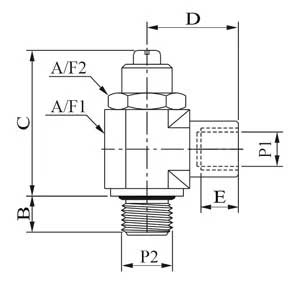
Pneumatic actuators move parts and tooling on automated lines, and their speed depends on how carefully air is metered. Well-chosen regulators let engineers tune each motion and hold it steady shift after shift, so even delicate components avoid rough handling.
Pick-and-place units and press-fit stations rely on pneumatic cylinders to move and seat parts. Speed matters more than most people expect. Too fast and a part bounces out of its nest. Set it too slow, and the station falls behind the rest of the line. Flow control regulators give engineers a simple way to set that speed and keep it.
Turning a Needle to Shape Every Stroke
Matching Actuator Speed to the Task: A gripper closing on a glass vial needs a gentle approach. On a weld fixture, the clamp can snap shut fast. Flow control regulators fitted at the cylinder ports let you set those speeds independently by restricting exhaust air with a fine needle, so extend and retract strokes each get the pace their job calls for.
Quick Connections That Keep Tuning Simple: Engineers reset speeds whenever a product or tooling change comes through, so the tubing around the regulator gets handled a lot. Stainless steel push-in fittings let technicians disconnect and reconnect lines in seconds without tools, and they hold a tight seal through washdowns and vibration. Less fiddling at the cylinder means more time spent actually checking the motion.
Same Motion, Every Single Cycle
Protecting Parts That Cannot Take a Knock: Repeatability is what keeps assembly honest. If a cylinder seats a bearing gently on one stroke and slams the next, you get scratched housings and failed press checks. Steady airflow keeps each stroke close to identical, which also makes cycle time predictable. Planners can schedule output with confidence, and quality staff stop chasing random defects at the end station.
Holding Settings Through Long Production Runs: A speed that drifts after a few hours causes as much trouble as one that was never set right. Good flow control regulators use a locking nut on the adjustment knob, so vibration or a curious operator cannot easily turn it. Some models carry graduated markings too, which helps a technician return to a known setting after a changeover.
Proving a Regulator Before It Joins the Line
Checking Flow Capacity and Adjustment Feel: Start with capacity. A regulator’s flow coefficient shows how much air it passes when fully open, and it must cover the cylinder’s bore and stroke at the speed you want. Then turn the needle across its range. Speed should change gradually, not jump in the last half turn. When evaluating a unit, watch for these signs:
- Gradual speed change across the needle range.
- No creep once the lock nut is tight.
- Free reverse flow on the return side.
- Ports matching your tube and thread, no adapters needed.
Pairing the Regulator with the Right Connections: Compatibility goes beyond the regulator body. The fitting has to suit the tube material and the operating pressure as well. In food and pharmaceutical plants, stainless steel push-in fittings resist corrosion from cleaning agents and keep the regulator port sealed. Check whether the actuator maker calls for meter-out mounting before you finalize the order.
Automation Running at the Right Pace
A cylinder moving at the wrong speed wastes parts quietly, one reject at a time. Tuning it properly costs little and pays back through steadier output and fewer stoppages, which is where the real return on investment shows up. Review the actuators on your line and speak with a fittings specialist about regulators sized for each motion.